Choosing between soft washing and pressure washing can feel confusing when you want to clean your property effectively without causing damage. Both methods remove dirt, grime, and organic growth, but they work in completely different ways and suit different surfaces. Understanding which technique fits your Calgary property helps you protect your investment while achieving spotless results. Calgary’s unique climate, with harsh winters and chinook winds, makes selecting the right cleaning method even more important for maintaining your exterior surfaces year after year.
What Is the Difference Between Soft Washing and Pressure Washing?
Pressure washing uses high-pressure water to blast away dirt, stains, and buildup from tough surfaces. The water pressure typically ranges from 1,500 to 4,000 PSI (pounds per square inch), making it powerful enough to remove stubborn grime from concrete, brick, and stone. This method relies purely on water force to clean surfaces quickly and efficiently.
Soft washing takes a gentler approach by combining low-pressure water application with biodegradable cleaning solutions. The pressure used in soft washing stays between 100 and 500 PSI, similar to a regular garden hose. Instead of relying on force, soft washing uses specialized cleaning agents that break down dirt, algae, mold, and mildew at the molecular level. The solution sits on the surface for a short time before being rinsed away, leaving surfaces clean without any harsh impact.
The key technical difference comes down to how each method achieves cleanliness. Pressure washing depends on mechanical force to physically remove contaminants, while soft washing uses chemical action to dissolve and eliminate them. This fundamental distinction determines which surfaces each method can safely clean without causing damage.
How Does Pressure Washing Work?
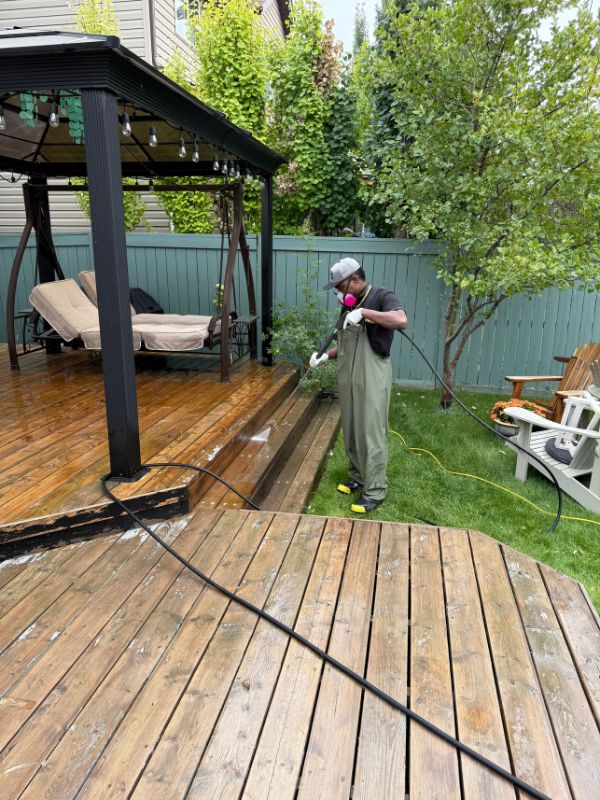
Pressure washing equipment uses a motorized pump to increase water pressure significantly before it exits through a specialized nozzle. The high-velocity water stream hits surfaces with enough force to dislodge dirt, oil stains, graffiti, and years of accumulated grime. Different nozzle tips create varying spray patterns, from narrow, concentrated streams for tough stains to wider fans for general cleaning.
The cleaning process is straightforward. A trained technician moves the pressure washer wand across the surface in consistent, overlapping patterns. The intense water pressure breaks the bond between contaminants and the surface, washing everything away instantly. For Calgary properties dealing with winter salt residue and road grime, pressure washing delivers fast, visible results on appropriate surfaces.
Best Surfaces for Pressure Washing
Concrete driveways and walkways handle pressure washing exceptionally well. The porous nature of concrete traps dirt deep within its surface, and only high-pressure water can reach and remove these embedded particles. Calgary driveways accumulate significant salt and sand during winter months, making pressure washing the ideal solution for spring cleaning.
Brick and stone exteriors benefit from pressure washing because their dense composition withstands high water pressure without damage. These materials often develop dark staining from pollution and weather exposure, which pressure washing removes effectively. The textured surface of brick and stone also requires the forceful water action to reach into crevices and mortar lines.
Heavy-duty commercial surfaces like parking garages, loading docks, and warehouse floors need pressure washing to handle the extreme buildup from vehicle traffic and industrial activities. These surfaces endure constant wear and require aggressive cleaning methods to maintain safety and appearance standards.
Industrial equipment and machinery accumulate grease, oil, and heavy residue that soft washing cannot adequately address. Pressure washing cuts through these tough contaminants, keeping equipment functioning properly and meeting workplace safety requirements.
When Pressure Washing May Cause Damage
Delicate siding materials like vinyl, aluminum, and fiber cement can crack, warp, or develop holes under excessive water pressure. The force can drive water behind the siding, leading to moisture problems inside your walls. Even though these materials seem sturdy, they are not designed to withstand the impact of high-pressure water jets.
Older wood surfaces become brittle over time, and pressure washing can splinter, gouge, or strip away the wood fibers. Decks, fences, and wooden trim that have weathered multiple Calgary winters are particularly vulnerable. The high pressure can also raise the wood grain, creating a rough texture that requires extensive sanding to smooth out.
Painted surfaces with loose or flaking paint get destroyed by pressure washing. The forceful water lifts and removes paint rapidly, often taking off more than you intended. If your Calgary property has older painted surfaces, pressure washing will likely strip the paint rather than clean it, requiring a complete repainting job afterward.
Roof shingles and tiles cannot withstand pressure washing without sustaining serious damage. The water pressure dislodges protective granules from asphalt shingles, shortening their lifespan significantly. It can also force water under shingles and tiles, creating leaks and water damage inside your home. Calgary’s freeze-thaw cycles already stress roofing materials enough without adding pressure washing damage.
How Does Soft Washing Work?
Soft washing relies on specially formulated cleaning solutions to do the heavy lifting instead of water pressure. The process begins with applying a biodegradable mixture of surfactants, algaecides, and mild bleaching agents to the surface. These solutions penetrate organic growth like algae, mold, and mildew, breaking them down chemically.
The cleaning solution typically remains on the surface for 10 to 20 minutes, giving it time to work through the contamination. This dwell time allows the chemicals to kill organic growth at the root level, not just remove the visible surface stains. After the solution has done its work, technicians rinse the surface with low-pressure water, washing away the dissolved contaminants and cleaning agents.
Because soft washing treats the root cause of organic staining, results last significantly longer than pressure washing. While pressure washing only removes what you can see, soft washing eliminates the organisms causing the growth, keeping surfaces cleaner for extended periods. This makes soft washing particularly valuable for Calgary properties that develop algae and moss growth during wet seasons.
Best Surfaces for Soft Washing
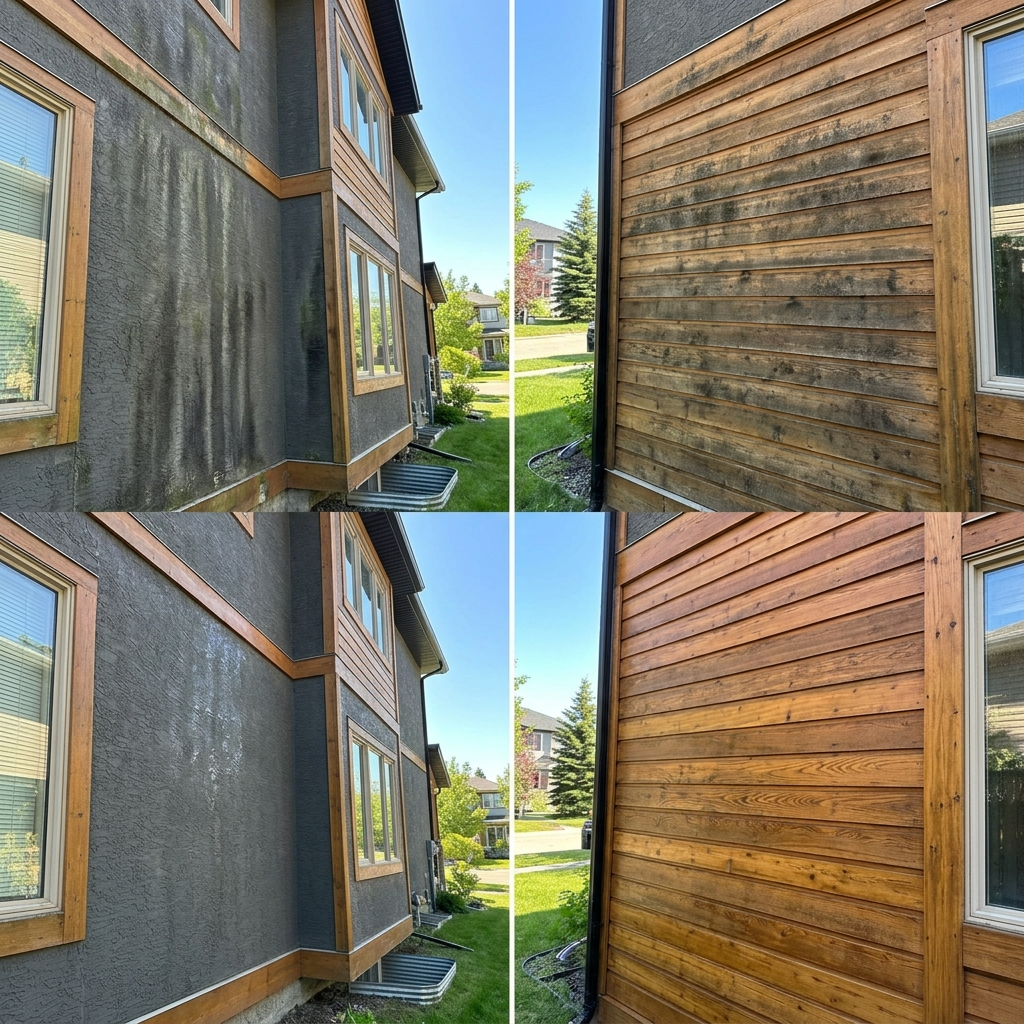
Vinyl and aluminum siding are perfect candidates for soft washing. These materials cover most Calgary homes and require gentle cleaning to avoid damage. Soft washing removes black streaks, algae, and dirt without risking cracks or forcing water behind the siding panels. The cleaning solution brightens the siding and kills any organic growth that has taken hold.
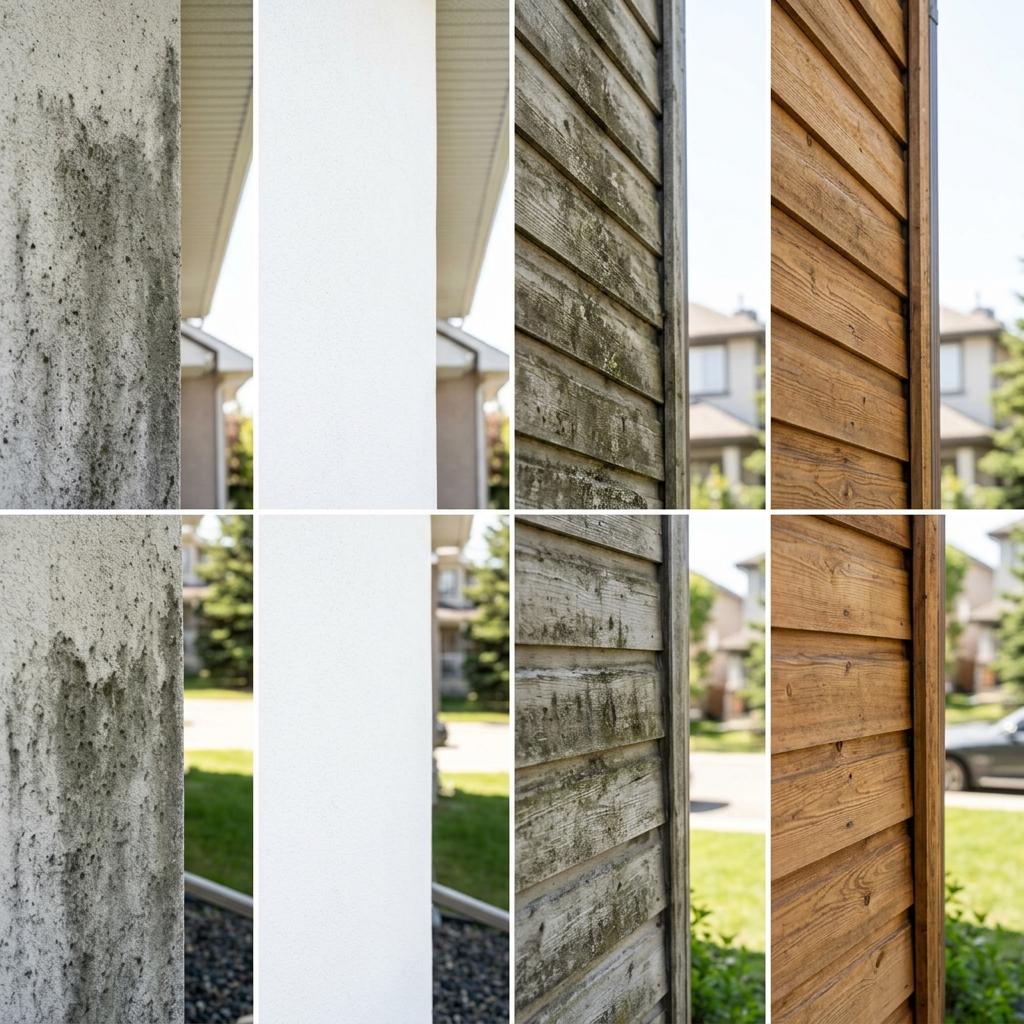
Stucco exteriors have a textured, porous surface that absorbs water and harbors algae growth. Pressure washing can chip and erode stucco, but soft washing cleans it thoroughly while preserving the surface integrity. Calgary homes with stucco finishes benefit from regular soft washing to prevent permanent staining.
Wood decks and fences need soft washing to avoid the splintering and grain-raising that pressure washing causes. The gentle cleaning process removes dirt, mildew, and weathering without damaging the wood fibers. Soft washing also prepares wood surfaces beautifully for staining or sealing by cleaning them without roughing up the texture.
Roof cleaning and moss removal require soft washing to protect shingle integrity. The cleaning solution kills moss, algae, and lichen at the root, preventing regrowth for years. This approach safely cleans roofs without the damage that pressure washing inflicts, extending the life of your Calgary roof despite harsh winter conditions.
Window frames and delicate trim around your property clean up perfectly with soft washing. These areas accumulate dirt and organic growth but cannot handle high-pressure water. Soft washing removes buildup gently, leaving frames and trim looking new without risking damage to caulking, paint, or the materials themselves.
Eco-Friendly Benefits of Soft Washing
Biodegradable cleaning solutions used in soft washing break down naturally after application, leaving no harmful residues in Calgary’s soil or waterways. These solutions are specifically formulated to be tough on contaminants but gentle on the environment. Unlike harsh chemical cleaners, professional soft washing products meet environmental safety standards while delivering superior cleaning results.
Lower water consumption makes soft washing a sustainable choice for Calgary properties. Because soft washing uses low pressure, it requires significantly less water volume than pressure washing. A typical soft wash job uses up to 70% less water while achieving better, longer-lasting results. This water efficiency matters in Calgary, where responsible water use benefits the entire community.
Effective algae and mold removal without harsh impact protects both your property and the surrounding landscape. The cleaning solutions kill these organisms completely, preventing rapid regrowth that would require frequent cleaning. This thorough approach means less frequent cleaning cycles, reducing overall environmental impact from repeated treatments.
Longer-lasting cleaning results mean fewer cleaning sessions over time, which translates to less water use, fewer chemicals applied, and lower overall environmental footprint. Properties that receive professional soft washing typically stay clean two to three times longer than pressure-washed surfaces, making soft washing the more sustainable long-term choice.
Which Method Is Best for Residential Properties in Calgary?
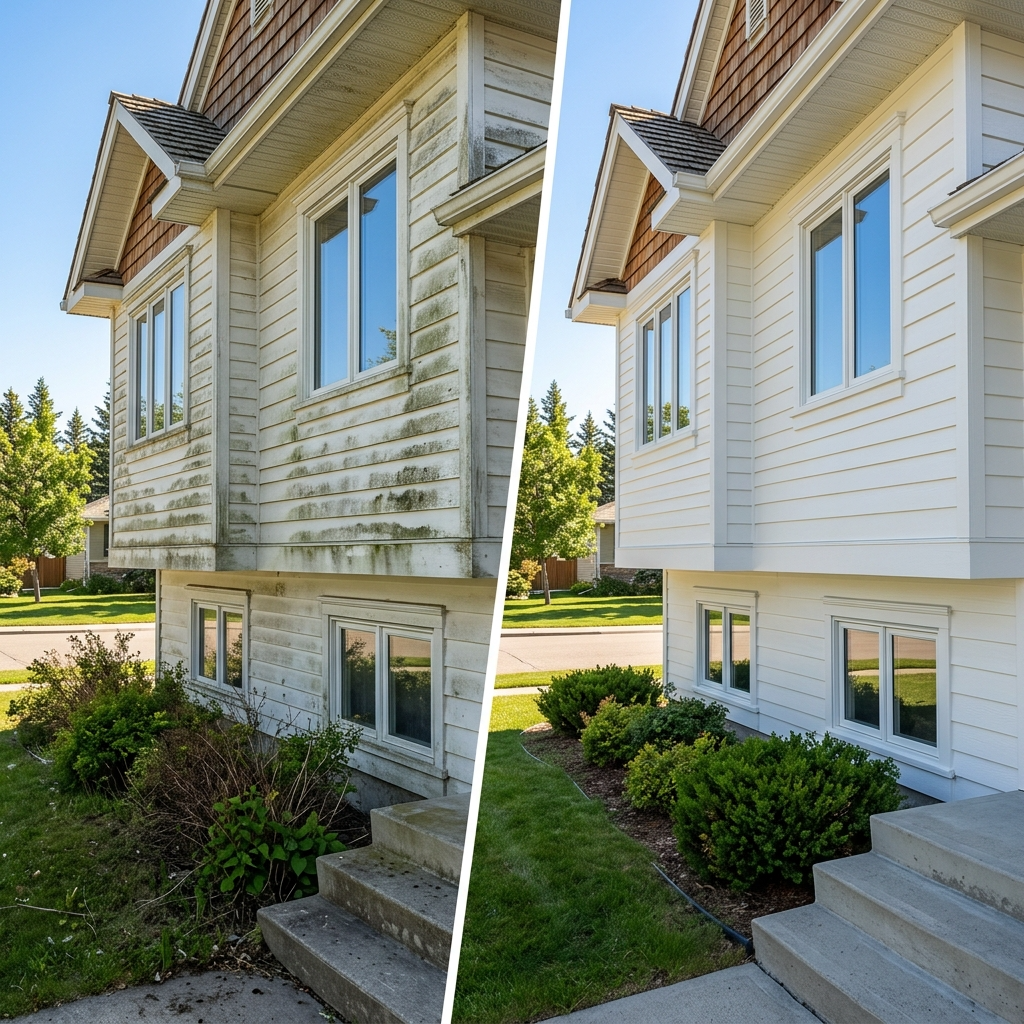
Calgary homes typically feature vinyl siding, stucco, or a combination of materials that respond best to soft washing. The majority of residential exteriors cannot safely handle pressure washing without risking damage. Soft washing cleans these surfaces thoroughly while preserving their condition and appearance for years to come.
Climate considerations play a significant role in choosing the right method. Calgary’s freeze-thaw cycles cause expansion and contraction in building materials, creating tiny cracks and vulnerabilities. Pressure washing can force water into these small openings, leading to moisture problems and accelerated deterioration. Soft washing avoids this risk by using minimal pressure while still removing all contaminants.
Soft washing advantages for preserving siding and paint cannot be overstated. Calgary homeowners invest significantly in their property’s exterior appearance, and harsh cleaning methods can undo that investment quickly. Soft washing maintains the integrity of paint finishes, prevents siding damage, and keeps homes looking fresh without the aggressive impact of high-pressure water.
Pressure washing for driveways affected by winter salt and grime remains the best choice for these tough surfaces. Calgary winters leave concrete driveways covered in salt residue, sand, and road grime that soft washing cannot fully remove. The high pressure breaks up these stubborn deposits, restoring your driveway’s appearance after each winter season. Combining soft washing for your home’s exterior with pressure washing for concrete surfaces gives you comprehensive cleaning tailored to each material’s needs.
Which Method Is Best for Commercial and Industrial Properties?
High-traffic areas requiring pressure washing include parking lots, loading zones, and entrance walkways where heavy foot and vehicle traffic creates stubborn buildup. Commercial properties in Calgary need pressure washing to maintain professional appearances and meet safety standards. Oil stains, tire marks, and ground-in dirt respond only to high-pressure cleaning on these durable surfaces.
Building facades and signage suit soft wash applications perfectly. Commercial buildings often feature painted surfaces, vinyl panels, or composite materials that pressure washing would damage. Soft washing removes pollution staining, algae growth, and general grime while protecting the building’s exterior investment. Clean signage and facades create positive first impressions without risking expensive repairs from aggressive cleaning methods.
Parking lots and loading docks endure constant abuse from vehicles, weather, and industrial activities. These concrete and asphalt surfaces need pressure washing to remove oil, grease, and heavy staining that accumulates from daily operations. Regular pressure washing keeps these areas safe by removing slippery substances and maintains a professional appearance for customers and clients.
Combining both methods for comprehensive cleaning delivers the best results for most commercial properties. A complete exterior maintenance program uses soft washing on building exteriors, windows, and delicate surfaces while applying pressure washing to concrete, asphalt, and heavy-duty areas. This strategic approach maximizes cleanliness across all surface types without causing damage to any area of your property.
What Are the Environmental Considerations in Calgary?
Water reclaim systems and sustainability practices matter when choosing exterior cleaning methods. Professional services like Geokat Clean Pro use advanced water reclaim technology that captures, filters, and recycles water during cleaning operations. This closed-loop system prevents contaminated runoff from entering storm drains and reduces total water consumption significantly. For Calgary properties, water reclaim technology demonstrates environmental responsibility while achieving superior cleaning results.
Municipal water regulations and best practices require professional cleaning services to manage runoff appropriately. Calgary has specific guidelines about wastewater management, especially when cleaning solutions or contaminants are involved. Reputable cleaning companies follow these regulations strictly, using containment and filtration systems to protect local water quality. Choosing a company that prioritizes compliance protects you from potential fines and helps preserve Calgary’s environmental health.
Eco-friendly cleaning solutions versus chemical runoff represents a critical decision point. Professional soft washing uses biodegradable products that break down harmlessly, while lower-quality services might use harsh chemicals that damage plants and contaminate soil. The cleaning solutions should be tough on dirt and organic growth but safe for your landscaping, pets, and Calgary’s broader ecosystem. Always ask about the products being used and their environmental certifications.
Protecting Calgary’s natural waterways and ecosystems requires responsible cleaning practices from both service providers and property owners. Contaminants washed from your property can reach rivers and streams if not properly managed. Professional exterior cleaning services implement best practices that prevent pollution, including proper chemical dilution, strategic application methods, and wastewater containment. This environmental stewardship protects the Bow River, Elbow River, and other Calgary waterways that define our community.
How Much Does Each Method Cost?
Pricing factors for exterior cleaning depend on surface type, square footage, and current condition. A heavily soiled property requires more time, cleaning solution, and effort than one that receives regular maintenance. Surface accessibility also affects cost since difficult-to-reach areas take longer to clean safely. Most Calgary cleaning services provide free estimates after assessing these factors specific to your property.
Soft washing cost considerations include the specialized cleaning solutions and the time required for proper application. While soft washing uses less water and lower pressure, the biodegradable cleaning products represent a material cost. However, soft washing typically costs less per square foot than pressure washing for residential applications because it works efficiently without requiring the same equipment intensity. Most Calgary homes can expect soft washing services to range from moderate to competitive pricing depending on property size and surface condition.
Pressure washing cost considerations center on equipment operation, water volume, and surface area. Concrete cleaning requires significant water flow and equipment power, which factors into pricing. Commercial pressure washing of large areas like parking lots typically costs less per square foot than small residential jobs due to efficiency at scale. Calgary property owners should budget based on the total area needing pressure washing and the severity of staining present.
Long-term value and maintenance frequency make soft washing more economical over time despite potentially similar upfront costs. Because soft washing kills organic growth at the source, surfaces stay clean two to four times longer than pressure-washed areas. This extended cleanliness means fewer cleaning cycles over the years, reducing your total maintenance costs. Pressure washing may need repeating annually or even more frequently, while soft washing often maintains results for two to three years on residential properties.
Can You Combine Soft Washing and Pressure Washing?
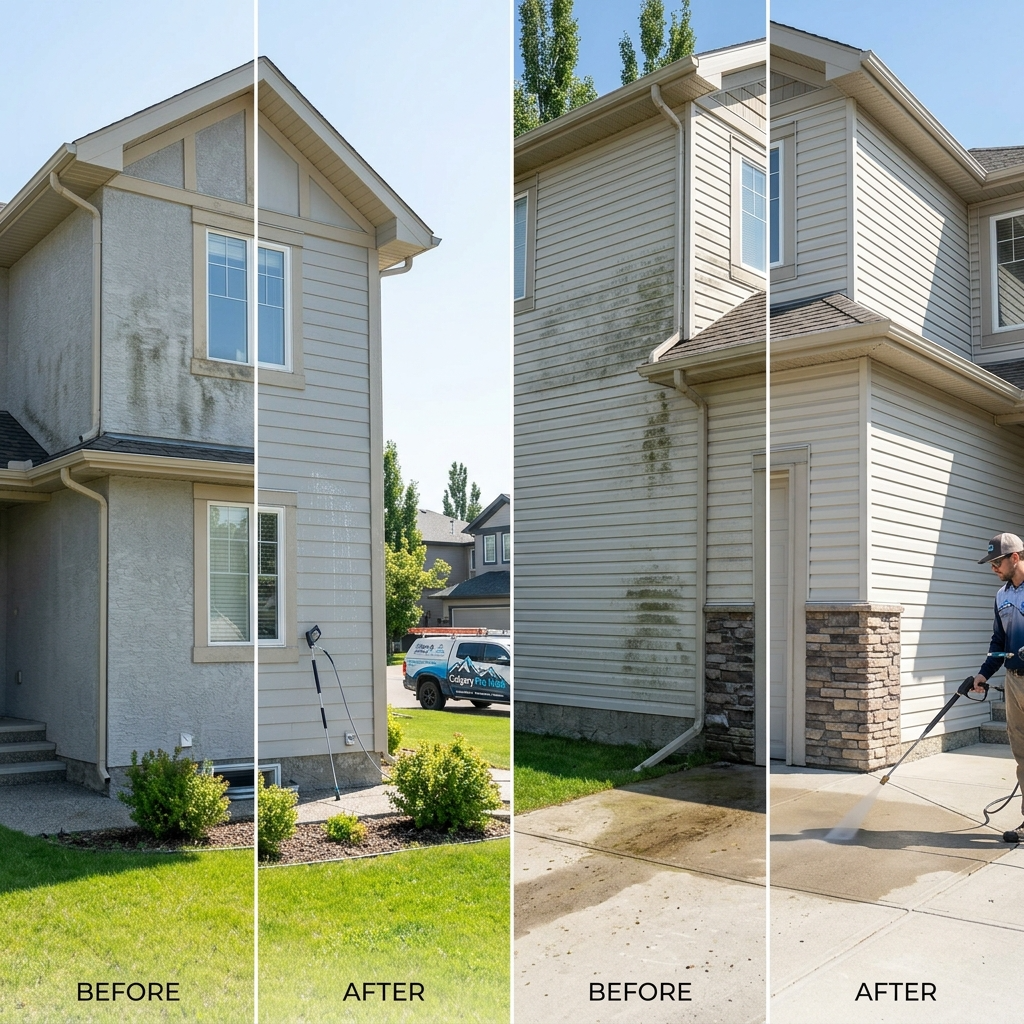
Benefits of hybrid cleaning approaches give you the best of both methods, tailored to your property’s specific needs. Most Calgary properties have a mix of surface types that each require different cleaning techniques. Using soft washing on delicate areas while applying pressure washing to tough surfaces creates comprehensive cleaning without compromising any materials. This strategic approach maximizes results and minimizes damage risk.
Example scenarios for complete property cleaning include soft washing your home’s vinyl siding, stucco walls, and roof while pressure washing the concrete driveway, sidewalks, and patio. This combination addresses every surface appropriately, leaving your entire property spotlessly clean. Commercial properties benefit from soft washing building exteriors and entryways while pressure washing parking areas and loading zones. The hybrid approach ensures nothing gets overlooked and every surface receives optimal treatment.
Professional assessment for optimal method selection takes the guesswork out of choosing between soft washing and pressure washing. Experienced technicians evaluate your property’s materials, condition, and specific cleaning needs before recommending a customized approach. This expertise prevents costly mistakes and ensures you get the right cleaning method for each surface. Geokat Clean Pro provides thorough property assessments to design cleaning plans that deliver exceptional results while protecting your investment.
Frequently Asked Questions
What is the main difference between soft washing and pressure washing?
The main difference lies in water pressure and cleaning approach. Pressure washing uses high-pressure water between 1,500 and 4,000 PSI to physically blast away dirt from tough surfaces like concrete and brick. Soft washing uses low pressure between 100 and 500 PSI combined with biodegradable cleaning solutions that chemically break down dirt, algae, and mold. Pressure washing relies on force while soft washing relies on chemistry to clean surfaces.
Is soft washing safe for all types of siding?
Soft washing is safe for nearly all residential siding types including vinyl, aluminum, stucco, fiber cement, and wood. The low pressure prevents damage while the cleaning solutions effectively remove dirt and organic growth. However, extremely old or deteriorated siding may require special consideration. Professional technicians assess siding condition before cleaning and adjust methods accordingly to ensure safe, effective results without causing any harm to your home’s exterior.
Can pressure washing damage my driveway or deck?
Pressure washing typically does not damage concrete driveways when performed correctly by trained professionals using appropriate pressure settings. However, pressure washing can seriously damage wood decks by splintering fibers, raising grain, and creating rough surfaces. Concrete handles high pressure well, but wooden decks require soft washing to clean effectively without causing structural damage that would require expensive repairs or replacement.
Which method is more environmentally friendly?
Soft washing is generally more environmentally friendly because it uses significantly less water, up to 70% less than pressure washing. The biodegradable cleaning solutions break down naturally without harming soil or waterways. When combined with water reclaim systems that capture and filter runoff, both methods can be performed sustainably. Professional services like Geokat Clean Pro use eco-friendly practices with both techniques to minimize environmental impact while delivering thorough cleaning results.
How often should I have my Calgary property soft washed or pressure washed?
Calgary homes typically need soft washing every two to three years for siding and exterior surfaces. Roofs may need soft washing every three to five years depending on shade coverage and moss growth. Concrete driveways and walkways benefit from annual pressure washing after winter to remove salt and grime buildup. Commercial properties with high visibility often schedule cleaning twice yearly. Your specific maintenance schedule depends on exposure to elements, surrounding vegetation, and aesthetic standards you want to maintain.
Does soft washing kill mold and algae permanently?
Soft washing kills existing mold and algae completely, eliminating them at the root level. The cleaning solutions are designed to destroy these organisms entirely, not just remove surface staining. While soft washing provides the longest-lasting results available, no cleaning method prevents new growth permanently because spores exist naturally in the environment. However, properly soft-washed surfaces typically remain free of visible mold and algae for two to four years, much longer than surfaces cleaned with pressure washing alone.
Is pressure washing effective in Calgary’s cold climate?
Pressure washing works effectively in Calgary during warmer months when temperatures stay consistently above freezing. Professional services typically operate from spring through fall when conditions allow safe cleaning without ice formation. Pressure washing removes winter salt damage, road grime, and accumulated dirt very effectively on appropriate surfaces. However, pressure washing should not be performed when temperatures approach freezing because water can freeze in equipment and on surfaces, causing damage. Soft washing can be performed in slightly cooler conditions since it uses less water volume.
Protecting Your Calgary Property with the Right Cleaning Method
Choosing between soft washing and pressure washing ultimately comes down to understanding your property’s specific needs and surface types. Calgary’s climate demands cleaning methods that remove buildup effectively while protecting materials from additional stress. Soft washing delivers gentle, long-lasting results for delicate surfaces like siding, stucco, and roofs. Pressure washing tackles tough jobs on concrete driveways and heavy-duty commercial surfaces where high pressure makes sense.
The best approach for most Calgary properties combines both methods strategically. This hybrid cleaning addresses each surface with the appropriate technique, maximizing cleanliness without risking damage to any materials. Professional assessment ensures you get customized recommendations based on your property’s unique characteristics and condition.
Geokat Clean Pro specializes in both pressure washing and soft washing services throughout Calgary. Their commitment to eco-friendly practices, advanced water reclaim systems, and proper technique selection protects your property while delivering exceptional results. Whether you need residential exterior cleaning, commercial building maintenance, or industrial surface treatment, choosing the right method makes all the difference in preserving your investment for years to come.