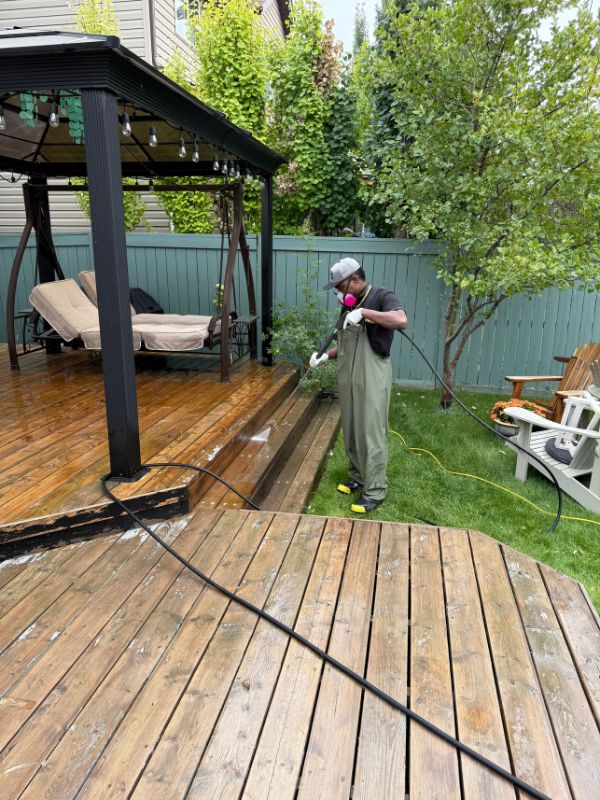
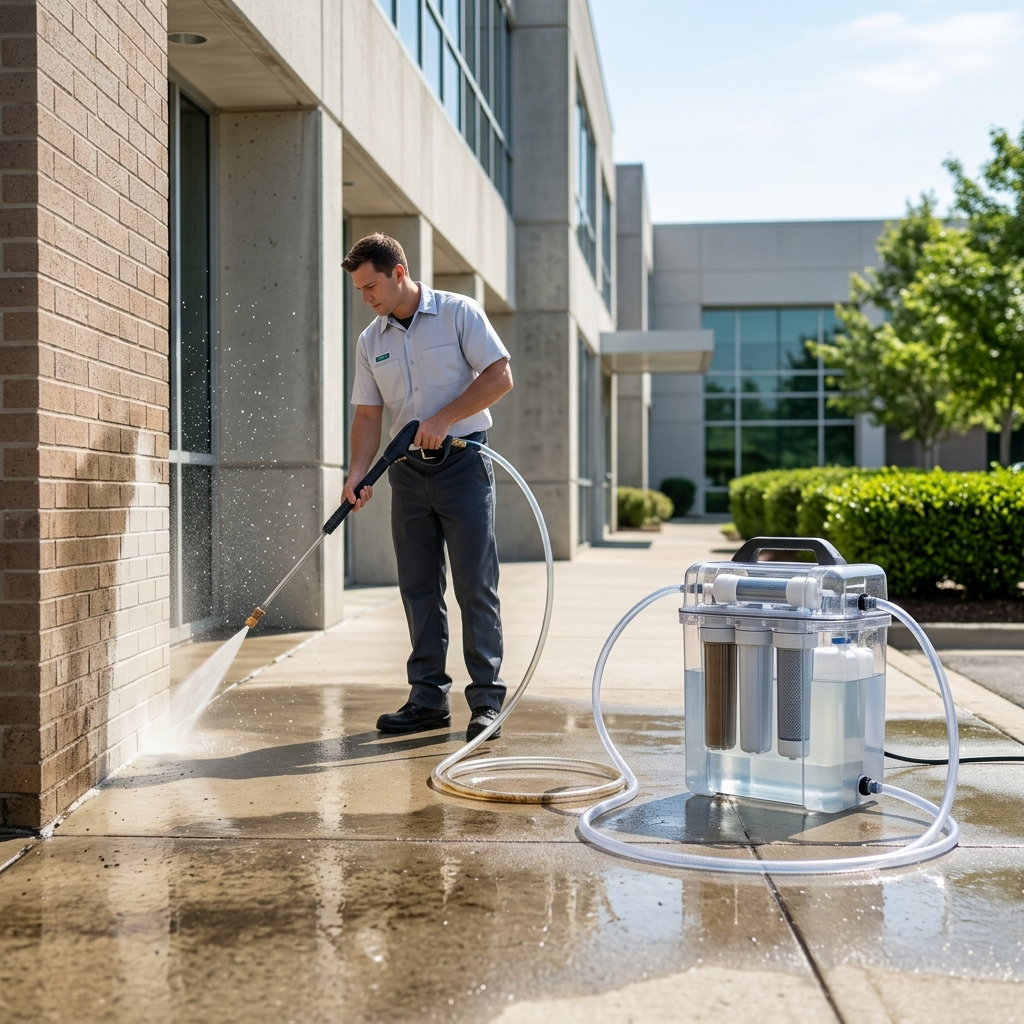
Professional exterior cleaning has changed dramatically in recent years, and water reclaim technology sits at the heart of this transformation. This advanced system captures, filters, and reuses wastewater during pressure washing operations, preventing contaminated runoff from entering storm drains and natural waterways. For Calgary property owners who value both pristine surfaces and environmental responsibility, understanding how water reclaim technology works helps explain why modern cleaning services deliver superior results while protecting local ecosystems. The technology addresses a critical problem that traditional pressure washing methods ignore: the thousands of gallons of contaminated water that typically flow directly into Calgary’s watershed with every cleaning job.
What Is Water Reclaim Technology in Pressure Washing?
Water reclaim technology is a specialized system that captures wastewater during exterior cleaning operations, filters out contaminants, and prepares the water for safe reuse or disposal. Unlike traditional pressure washing methods that allow dirty runoff to flow freely into storm drains, reclaim systems use vacuum technology and containment equipment to collect every drop of used water at the source. The captured wastewater passes through multiple filtration stages that remove sediment, oils, chemicals, and other pollutants before the water can be safely reused or properly disposed of according to environmental regulations.
The primary function of these systems centers on environmental protection and resource conservation. When pressure washing removes dirt, grime, oil stains, mold, and other contaminants from surfaces, all those pollutants mix with the cleaning water and detergents. Without a reclaim system, this contaminated mixture flows directly into Calgary’s storm sewer system, which feeds into rivers and streams without treatment. Water reclaim technology breaks this cycle by intercepting the wastewater before it can cause environmental harm.
Professional reclaim systems consist of several key components working together. The containment equipment creates barriers around the cleaning area to prevent runoff. Powerful vacuum units continuously remove the wastewater as it accumulates. Storage tanks hold the captured water while filtration equipment processes it. Control systems monitor water quality and manage the entire operation. This integrated approach ensures that exterior cleaning projects maintain the highest environmental standards while delivering exceptional results.
The Environmental Impact of Traditional Pressure Washing
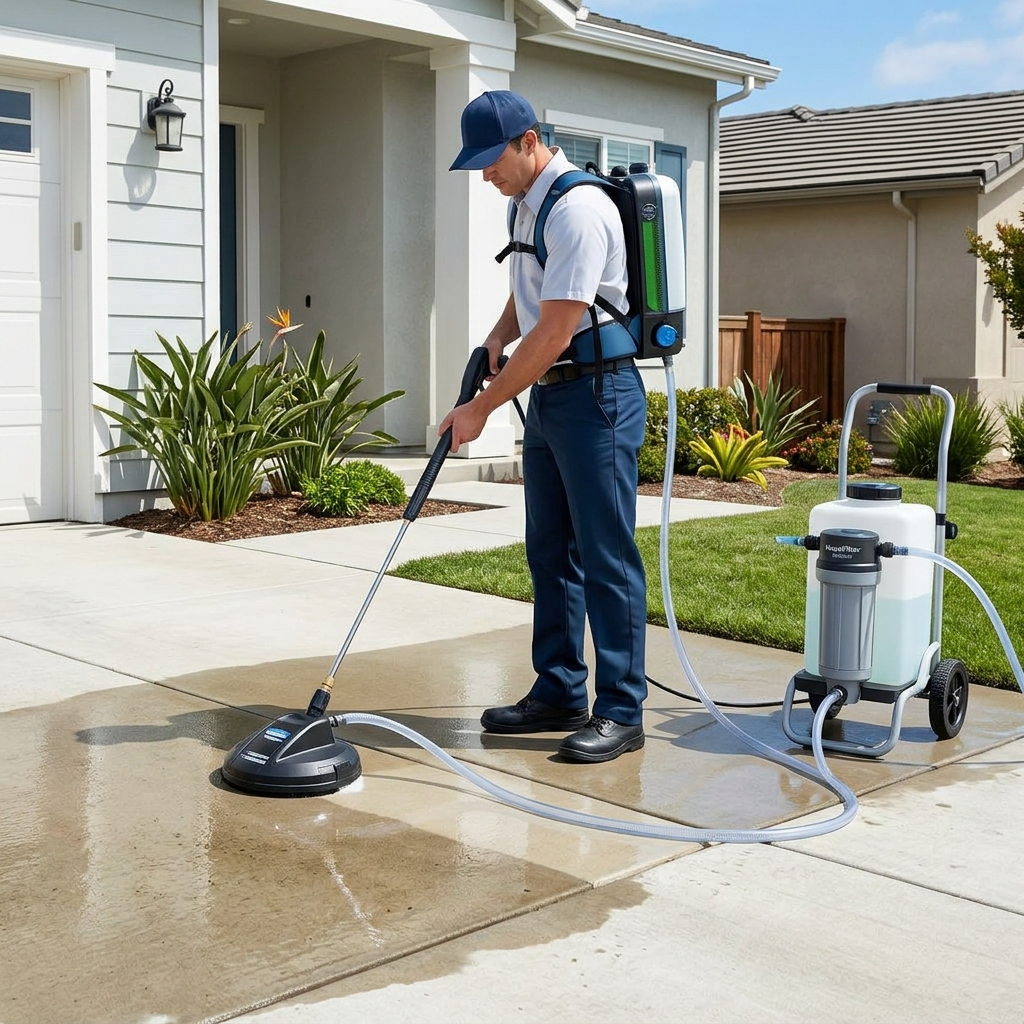
Traditional pressure washing methods create significant environmental challenges that many property owners never consider. A standard residential driveway cleaning can consume between 300 to 500 gallons of water, and all that water becomes contaminated with petroleum residues, heavy metals from vehicle fluids, dirt particles, and cleaning chemicals. When this mixture flows into storm drains, it travels directly to Calgary’s rivers and streams without any treatment. Storm water systems are designed only for rainwater, not for the complex pollutants generated during pressure washing operations.
The contamination issues extend beyond simple dirt and grime. Commercial and industrial cleaning projects introduce even more problematic substances into the water supply. Oil and grease from parking lots, chemical residues from building surfaces, paint chips containing lead or other heavy metals, and industrial cleaning agents all mix together in the runoff. Studies show that urban runoff ranks among the top sources of water pollution in North American cities, and pressure washing without reclaim systems contributes substantially to this problem.
Water consumption statistics reveal another dimension of the environmental impact. Professional pressure washing operations can use between 2,000 to 8,000 gallons of water per day on large commercial projects. Fleet washing services, building exterior cleaning, and industrial facility maintenance generate enormous water demands. In Calgary, where water conservation remains a priority for municipal planning, this level of consumption raises concerns about resource management. The combination of high water usage and pollution discharge makes traditional pressure washing methods increasingly unsustainable as environmental awareness grows.
Calgary’s watershed encompasses sensitive ecosystems that support fish populations, waterfowl, and diverse plant communities. The Bow River and Elbow River systems flow through the city and beyond, connecting urban areas with downstream agricultural regions and natural habitats. Contaminated runoff from pressure washing operations affects water quality throughout this network. Phosphates from cleaning detergents promote algae growth that depletes oxygen levels. Petroleum products create surface films that interfere with aquatic life. Heavy metals accumulate in sediments where they pose long-term risks to the entire ecosystem.
How Water Reclaim Systems Capture and Filter Wastewater
The Collection Process
Water reclaim systems begin their work at the moment cleaning operations start. Professional technicians deploy containment mats or berms around the work area, creating a sealed perimeter that prevents any water from escaping. These containment barriers are designed specifically for pressure washing applications, featuring raised edges and durable materials that withstand the force of high-pressure water spray. The sealed area acts like a temporary collection basin where all wastewater accumulates during cleaning.
As pressure washing proceeds, powerful vacuum technology continuously removes water from the containment area. Industrial vacuum units generate sufficient suction to capture water even as it flows across surfaces at high velocity. The vacuum wands or surface cleaning tools integrate collection capabilities directly into the cleaning equipment, capturing wastewater within seconds of it being generated. This immediate collection prevents any opportunity for contaminated water to escape the work area or seep into surrounding soil.
Surface sealing techniques provide additional protection on porous surfaces like concrete or asphalt. Professional cleaning teams may apply temporary sealants or use specialized equipment that creates a water-tight barrier during cleaning operations. These methods prove essential when cleaning large areas where perfect containment becomes challenging. The combination of physical barriers, continuous vacuum collection, and surface preparation ensures that water reclaim systems achieve capture rates exceeding 95% in most applications.
Multi-Stage Filtration
Once captured, wastewater enters a sophisticated filtration system designed to remove progressively smaller contaminants. The first stage focuses on sediment removal, using screens and settling tanks to extract dirt particles, debris, and larger solid materials. This initial filtration prevents damage to subsequent system components while removing the bulk of visible contamination. Sediment filters can capture particles down to 50 microns, eliminating most soil, sand, and organic matter from the water.
The second filtration stage targets oils and petroleum products through specialized separation technology. Oil-water separators rely on density differences to pull hydrocarbons to the surface where they can be skimmed off and collected. Some advanced systems use coalescing filters that force tiny oil droplets to combine into larger globules that separate more easily. This stage proves critical for automotive service areas, parking lots, and industrial facilities where petroleum contamination presents the greatest environmental risk.
Final filtration stages employ activated carbon filters, chemical treatment, or advanced oxidation processes to remove dissolved contaminants and cleaning chemicals. These systems extract detergent residues, heavy metals, and other pollutants that remain after mechanical filtration. The water quality after complete filtration meets environmental discharge standards, making it safe for proper disposal through sanitary sewer connections or suitable for reuse in subsequent cleaning operations. Professional water reclaim systems include monitoring equipment that tests water quality throughout the filtration process, ensuring compliance with all regulatory requirements.
Benefits of Water Reclaim Technology for Calgary Properties
Water reclaim technology delivers substantial environmental benefits that extend throughout Calgary’s community. The most immediate advantage is dramatic water consumption reduction, with reclaim systems cutting total water usage by 60% to 80% on large commercial projects. When water can be filtered and reused multiple times during a single cleaning operation, the total volume drawn from municipal supplies drops significantly. This conservation becomes especially valuable during Calgary’s dry summer months when water restrictions may limit outdoor usage.
Compliance with municipal wastewater regulations represents another critical benefit for commercial property owners. Calgary’s bylaws increasingly restrict the discharge of contaminated water into storm sewer systems, and enforcement actions can result in substantial fines for violations. Properties using water reclaim technology demonstrate proactive compliance with environmental regulations, avoiding legal complications while contributing to broader water quality protection efforts. Industrial facilities, commercial properties, and multi-unit residential complexes face the strictest regulatory scrutiny, making reclaim systems essential for maintaining operating permits.
Protection of Calgary’s watershed creates long-term value for the entire community. The Bow River watershed supplies drinking water for over a million people and supports recreational activities that drive tourism and quality of life. Every pressure washing operation that uses reclaim technology prevents hundreds of gallons of contaminated water from entering this critical resource. The cumulative effect of widespread adoption could substantially improve water quality throughout Calgary’s river systems, benefiting fish populations, wildlife habitats, and downstream water users.
Cost efficiency through water reuse provides direct financial returns, especially on large-scale projects. Commercial and industrial clients facing multi-day cleaning operations can reduce water costs by 50% or more when reclaim systems allow continuous reuse. The savings compound on projects requiring thousands of gallons of water, like warehouse exterior cleaning, fleet washing operations, or complete building facade restoration. While water costs in Calgary remain relatively modest, the combination of reduced consumption and avoided disposal fees creates measurable economic advantages.
When Is Water Reclaim Technology Essential?
Commercial and Industrial Applications
Commercial and industrial properties face unique cleaning challenges that make water reclaim technology essential rather than optional. Manufacturing facilities, distribution centers, automotive service businesses, and retail complexes generate substantial surface contamination that requires regular cleaning. The scale of these operations means a single cleaning project might involve 10,000 square feet or more of concrete, building facades, or equipment surfaces. Without reclaim technology, the wastewater from such projects would introduce massive pollution loads into Calgary’s storm water system.
Regulatory compliance requirements for commercial properties have tightened significantly in recent years. Calgary’s Municipal Development Plan emphasizes environmental sustainability, and bylaws now specifically address wastewater management from commercial cleaning operations. Properties that discharge contaminated water into storm drains risk enforcement actions, including stop-work orders and financial penalties. Insurance providers and property management companies increasingly require proof of environmental compliance, making water reclaim systems a business necessity rather than an optional upgrade.
High-volume cleaning projects benefit most dramatically from water reclaim technology. Fleet washing operations for delivery companies, transit authorities, or construction firms process dozens of vehicles daily. The accumulated water consumption and pollution generation from traditional washing methods would be enormous. Reclaim systems allow these businesses to operate sustainably, maintaining clean fleets without compromising environmental standards. Similarly, large warehouse facilities, shopping center parking structures, and industrial yards require periodic deep cleaning that generates thousands of gallons of contaminated wastewater, making reclaim technology indispensable.
Residential Considerations
Homeowners should consider eco-friendly cleaning with water reclaim technology when projects involve significant contamination or large surface areas. Driveway cleaning typically ranks as the residential application where reclaim systems provide the greatest environmental benefit. Years of accumulated oil drips, tire residue, and automotive fluids create heavy petroleum contamination on garage floors and driveway surfaces. When pressure washing removes these contaminants without a reclaim system, they flow directly into storm drains and eventually into Calgary’s rivers.
Deck restoration projects benefit from water reclaim technology when chemical strippers or cleaning agents are required to remove old stains or finishes. These chemicals can harm vegetation and soil organisms if allowed to run off into landscaping areas. Professional cleaning services using reclaim systems capture all wastewater containing chemical residues, protecting your yard and garden while ensuring proper disposal. The technology also matters when cleaning near sensitive areas like ponds, streams, or natural vegetation zones where runoff could cause immediate environmental damage.
Exterior surface maintenance on multi-level homes, extensive hardscaping, or properties with large paved areas generates enough wastewater volume to warrant reclaim technology. A complete house exterior cleaning including siding, windows, eaves, and walkways might produce 800 to 1,200 gallons of contaminated water. Homeowners committed to environmental responsibility recognize that this volume deserves the same careful management as commercial projects. Professional services equipped with water reclaim systems make it possible to maintain pristine property appearance without compromising ecological values.
Eco-Friendly Cleaning Practices Beyond Water Reclaim
Biodegradable cleaning solutions work alongside reclaim systems to minimize environmental impact throughout the cleaning process. These specially formulated products break down naturally into harmless compounds within days of application, unlike conventional detergents that persist in waterways for months. Professional cleaning companies select biodegradable solutions based on specific cleaning challenges, with different formulations for oil and grease removal, mold and mildew treatment, or general dirt and grime. When combined with water reclaim technology, biodegradable products ensure that even if trace amounts of cleaning solution remain after filtration, they pose no long-term environmental risk.
Soft wash methods represent another sustainable practice that complements water reclaim technology. Soft washing uses low-pressure application techniques with specialized cleaning solutions to remove contaminants without the high water volumes required for pressure washing. This approach can reduce water consumption by 75% compared to traditional pressure washing while often achieving superior results on delicate surfaces. Soft washing excels for roof cleaning, painted surfaces, and historic building restoration where high pressure could cause damage. The reduced water volume makes containment and reclaim processes even more efficient.
Professional cleaning companies integrate multiple sustainable practices into comprehensive service protocols. Pre-treatment of heavily soiled areas reduces the total water needed for main cleaning operations. Surface preparation and debris removal before washing prevents unnecessary contamination of reclaim water. Strategic scheduling during optimal weather conditions minimizes water waste from evaporation. Equipment maintenance ensures all systems operate at peak efficiency, preventing leaks and unnecessary water consumption. This holistic approach to sustainability demonstrates that environmental responsibility extends beyond any single technology or method.
Why Choose Professional Services with Water Reclaim Systems?
The comparison between DIY pressure washing and professional services with water reclaim technology reveals substantial differences in environmental impact and results. Homeowners who rent pressure washing equipment from hardware stores receive no guidance on wastewater management and no equipment for capturing runoff. The rental units typically lack adjustable pressure controls, increasing the risk of surface damage while consuming maximum water volumes. DIY operators often overuse cleaning chemicals in attempts to improve results, creating more concentrated contamination in the runoff. The entire DIY approach optimizes for convenience and cost rather than environmental responsibility or cleaning effectiveness.
Professional services equipped with advanced reclaim technology bring specialized expertise to every project. Trained technicians understand how different surfaces respond to various pressure levels and cleaning solutions. They can identify contamination sources and select appropriate treatment methods that maximize cleaning results while minimizing environmental impact. Professional equipment provides precise pressure control, consistent cleaning coverage, and integrated water management that rental equipment cannot match. The investment in commercial-grade reclaim systems, filtration equipment, and containment tools reflects a commitment to environmental standards that DIY approaches simply cannot replicate.
Working with Calgary-based cleaning companies that prioritize environmental responsibility provides benefits extending beyond individual projects. These companies maintain relationships with local environmental authorities and stay current on evolving regulations and best practices. They carry appropriate insurance coverage for environmental liability, protecting property owners from potential complications related to contamination incidents. Professional services handle all aspects of wastewater management and disposal, including documentation required for regulatory compliance. The peace of mind that comes from knowing your cleaning project meets the highest environmental standards carries value that extends far beyond the immediate cost comparison.
The Future of Sustainable Exterior Cleaning in Calgary
Emerging water reclaim technologies continue advancing the environmental performance of professional cleaning services. New filtration systems using advanced membranes and chemical processes can achieve near-drinking-water quality from heavily contaminated pressure washing runoff. Portable reclaim units designed for residential applications are becoming more compact and affordable, making the technology accessible for smaller projects. Real-time water quality monitoring systems provide instant feedback on filtration effectiveness, ensuring consistent compliance with environmental standards. These innovations promise to make sustainable cleaning practices even more efficient and widely adopted in coming years.
The cleaning industry is seeing rapid development in closed-loop systems that recycle water multiple times during a single project without discharge. These systems combine advanced filtration with water treatment capabilities that restore the water to near-original quality after each use. On large commercial projects, closed-loop systems can reduce total water consumption by 90% or more compared to traditional methods. The technology proves especially valuable for facilities located in environmentally sensitive areas or regions facing water scarcity concerns. As closed-loop systems become more cost-effective, they may eventually replace current reclaim technology as the industry standard.
Growing demand for eco-conscious cleaning services among Calgary homeowners and businesses is reshaping the local market. Property owners increasingly ask about environmental practices during service consultations, making sustainability credentials a key competitive differentiator. Commercial property managers face pressure from tenants and corporate sustainability programs to demonstrate environmental responsibility in all operations, including routine maintenance. This demand drives investment in advanced reclaim technology and encourages cleaning companies to obtain environmental certifications. The trend suggests that within a few years, water reclaim systems may transition from a premium offering to a baseline expectation for professional exterior cleaning services.
Environmental regulations continue evolving to address water quality concerns and climate change impacts. Calgary city officials are developing stricter standards for commercial wastewater discharge and expanding enforcement capabilities. Provincial environmental protection frameworks increasingly emphasize watershed protection and pollution prevention. These regulatory changes will require more businesses to adopt water reclaim technology and may eventually extend requirements to residential applications. Professional cleaning companies that invest in advanced reclaim systems today position themselves to lead the industry as environmental standards tighten. The future of exterior cleaning in Calgary clearly points toward comprehensive water management and environmental responsibility as fundamental requirements rather than optional enhancements.
Frequently Asked Questions
What is water reclaim technology in pressure washing?
Water reclaim technology is a system that captures wastewater during pressure washing operations, filters out contaminants like dirt, oils, and chemicals, and prepares the water for safe reuse or proper disposal. The technology prevents contaminated runoff from entering storm drains and protects local waterways from pollution.
How much water does a reclaim system save during exterior cleaning?
Water reclaim systems typically reduce total water consumption by 60% to 80% on commercial projects by filtering and reusing water multiple times during cleaning operations. On residential projects, savings range from 200 to 400 gallons depending on the scope of work and number of reuse cycles possible.
Is water reclaim technology required for all pressure washing jobs in Calgary?
Calgary bylaws require proper wastewater management for commercial and industrial cleaning operations, which typically means using reclaim systems or similar containment technology. Residential projects are not currently mandated to use reclaim systems, but professional services increasingly adopt them as best practice for environmental protection.
Can reclaimed water be reused indefinitely during cleaning?
Reclaimed water can typically be reused three to five times during a single project before the accumulated contaminant load requires disposal and fresh water replacement. The exact number of reuse cycles depends on the initial contamination level, filtration system capacity, and cleaning effectiveness required.
What happens to the contaminants removed during the filtration process?
Contaminants extracted during filtration are collected as solid waste or concentrated liquids that must be disposed of according to environmental regulations. Professional cleaning companies work with licensed waste management services to ensure proper handling of filtered sediments, separated oils, and other pollutants.
Does using water reclaim technology affect cleaning results?
Water reclaim technology does not compromise cleaning effectiveness. The filtration systems remove contaminants thoroughly enough that reused water performs similarly to fresh water in most applications. Professional technicians monitor water quality and replace reclaimed water with fresh supplies when necessary to maintain optimal cleaning results.
How do water reclaim systems help protect Calgary’s environment?
Water reclaim systems prevent contaminated wastewater from entering Calgary’s storm drains and flowing directly into the Bow River and Elbow River systems. By capturing pollutants like petroleum products, heavy metals, and cleaning chemicals before they reach waterways, reclaim technology protects aquatic ecosystems, downstream water users, and the broader watershed that supplies drinking water to over a million people.