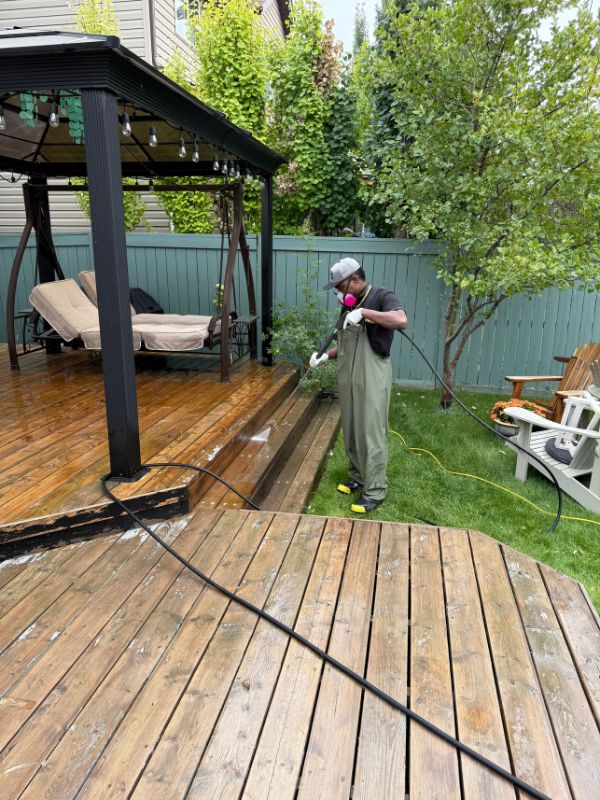

When it comes to keeping your home or business looking its best, the cleaning method matters just as much as the result. Eco-friendly exterior cleaning solutions in Calgary are becoming the go-to choice for property owners who want clean surfaces without harming the environment. At Geokat Clean Pro, we believe that exceptional cleaning results and ecological responsibility go hand in hand. This guide walks you through everything you need to know about green cleaning for Calgary properties.
Why Choose Eco-Friendly Exterior Cleaning?
Traditional exterior cleaning methods often rely on harsh chemical detergents that wash directly into storm drains, soil, and eventually local waterways. These chemicals can damage plant life, harm aquatic ecosystems, and leave residues on surfaces that affect air and water quality. For Calgary, where the Bow River watershed plays a critical role in the city’s ecology, the impact of chemical runoff is a serious concern.
Sustainable cleaning practices reduce this impact significantly. Biodegradable cleaning agents break down naturally without leaving toxic residues, while water reclaim systems prevent contaminated water from entering the local watershed. Property owners who choose green cleaning are actively contributing to Calgary’s environmental health.
There are also practical benefits for your property. Eco-friendly solutions tend to be gentler on surfaces like wood decking, painted siding, and landscaping. They reduce the risk of surface degradation over time, which means your exterior finishes last longer and require less maintenance.
From a financial perspective, sustainable cleaning can reduce long-term costs. Fewer surface repairs, less landscape damage, and lower water usage all add up to real savings over the years. Choosing green cleaning is not just an environmental decision; it is a smart investment in your property.
Understanding Green Cleaning Technologies
Water Reclaim Systems and Their Environmental Benefits
Water reclaim technology is one of the most impactful advances in sustainable pressure washing. These systems collect the water used during a cleaning job, filter out contaminants like grease, dirt, and chemical residue, and allow the cleaned water to be safely discharged or reused. The result is dramatically less water waste and far less pollutant runoff entering Calgary’s drainage systems.
The process works by placing collection berms or vacuum recovery units around the cleaning area. As water runs off the surface being cleaned, it is directed into a filtration and reclaim unit. Depending on the system, multiple stages of filtration remove sediment, oils, and chemical compounds before the water is either recycled back into the cleaning process or disposed of in compliance with municipal regulations.
For Calgary specifically, this technology aligns with the city’s water conservation goals. The region faces periodic drought conditions, and responsible water use during commercial and residential cleaning is increasingly expected. Advanced reclaim systems can recover up to 90% of water used during a job, a significant reduction compared to conventional methods where all water is lost to runoff.
Geokat Clean Pro uses advanced water reclaim systems on every applicable job to ensure that cleaning operations never contribute to local water contamination. This is one of the clearest ways a cleaning company can demonstrate genuine environmental commitment.
Biodegradable Cleaning Agents vs Traditional Chemicals
Not all cleaning solutions are created equal. Traditional exterior cleaning products often contain phosphates, chlorine bleach, petroleum-based solvents, and synthetic surfactants. These ingredients are effective at cutting through grime but leave behind chemical residues that can kill grass, damage garden beds, and seep into groundwater.
Biodegradable cleaning agents use plant-derived surfactants, citrus-based solvents, and enzymatic compounds that break down naturally in the environment. They are formulated to clean effectively while posing no lasting risk to soil, vegetation, pets, or humans. A 2025 study on green cleaning formulations found that plant-based detergents achieved comparable or superior cleaning performance to traditional products in over 80% of tested applications.
For families with children, pets, or outdoor gardens, this matters a great deal. Eco-friendly detergents mean you do not have to worry about residue on a deck where kids play or chemicals washing into flower beds after a rain. The safety profile is simply better across the board.
The effectiveness of biodegradable agents has improved substantially over the past decade. Modern formulations can tackle mold, mildew, algae, oil stains, and oxidation with results that match or exceed what harsh chemicals deliver, especially when combined with the right application technique like soft washing.
Eco-Friendly Cleaning Methods for Different Property Types
Residential Exterior Cleaning Solutions
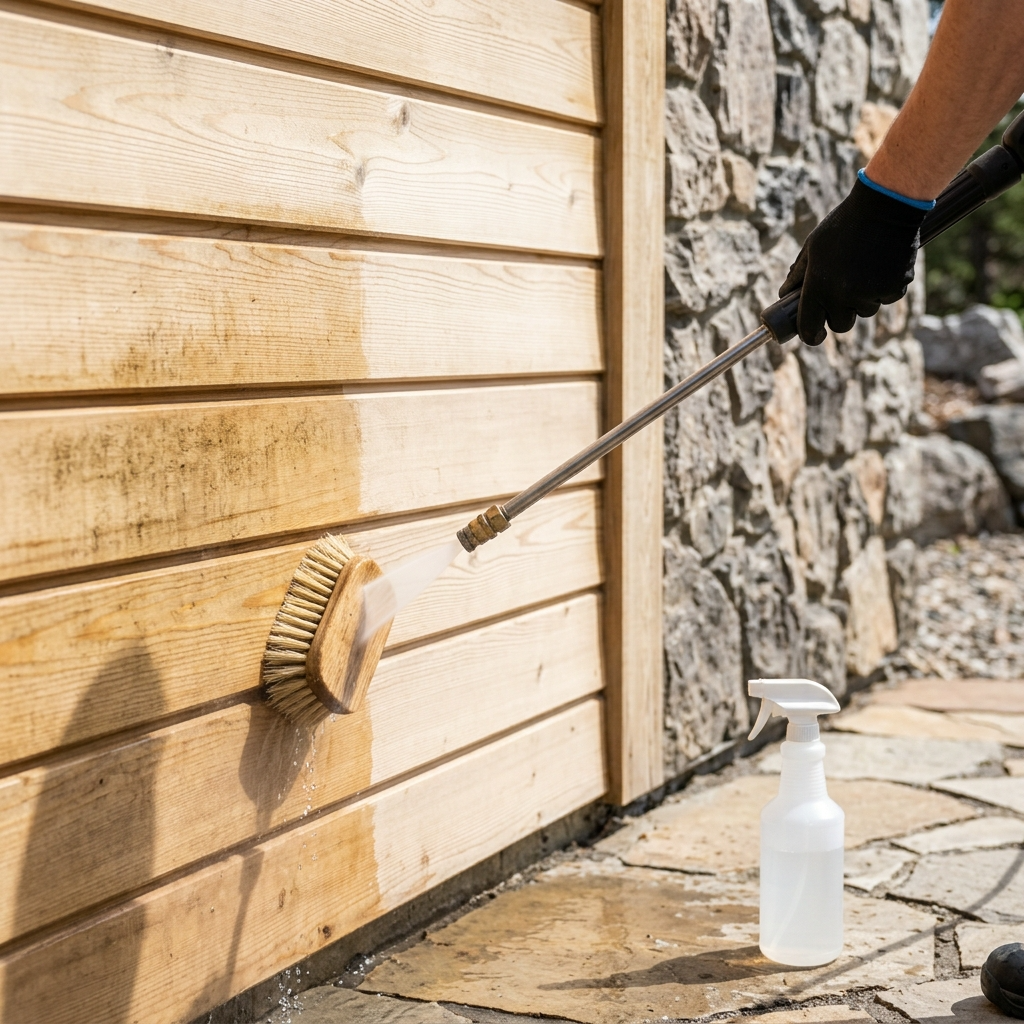
For homeowners in Calgary, eco-friendly exterior cleaning covers a wide range of surfaces, including vinyl and wood siding, concrete driveways, brick pathways, wood decks, fences, and roof areas. Each surface requires a different approach to achieve clean results without causing damage.
Soft washing is the preferred method for delicate surfaces like painted wood siding, stucco, and roofing materials. It uses low water pressure combined with biodegradable cleaning solutions that penetrate and lift biological growth like algae, moss, and lichen without abrading the surface. This is far safer than high-pressure washing for most residential exteriors.
For driveways and patios, a controlled pressure wash using reclaimed water and a targeted cleaning agent removes embedded grime effectively. Protecting surrounding garden beds during this process is straightforward with proper setup. Professionals place temporary covers over garden areas and use containment systems to prevent any dirty water from reaching landscaping.
Calgary’s climate adds a seasonal layer to residential cleaning planning. The best windows for exterior cleaning are late spring through early fall, once temperatures are consistently above 5°C. Cleaning in late fall before freeze-up can also help prevent moisture from sitting in surface cracks over winter and causing frost damage.
Commercial and Industrial Eco-Friendly Approaches
For businesses in Calgary, exterior cleanliness directly affects how customers and clients perceive your operation. Commercial and industrial properties face a different scale of challenge, with larger surface areas, heavier soiling from vehicle traffic and industrial activity, and stricter regulatory requirements for wastewater management.
Large-scale sustainable cleaning uses industrial-grade water reclaim systems that can handle the volume of water needed for parking lots, warehouse exteriors, loading docks, and commercial facades. These systems ensure that contaminated runoff from oil, grease, or chemical residues is captured and disposed of properly, in line with Calgary’s stormwater bylaws.
Meeting environmental compliance standards is not optional for most commercial operations. Calgary’s municipal regulations require that wastewater from exterior cleaning activities not enter the storm drain system without treatment. Using a professional eco-friendly cleaning service ensures that your business stays compliant and avoids potential fines or liability.
Maintaining a professional appearance while being environmentally responsible is a strong brand statement. Many Calgary businesses now highlight their sustainable practices as part of their identity. Partnering with a green cleaning provider like Geokat Clean Pro supports that message with action.
How to Identify Truly Sustainable Cleaning Services
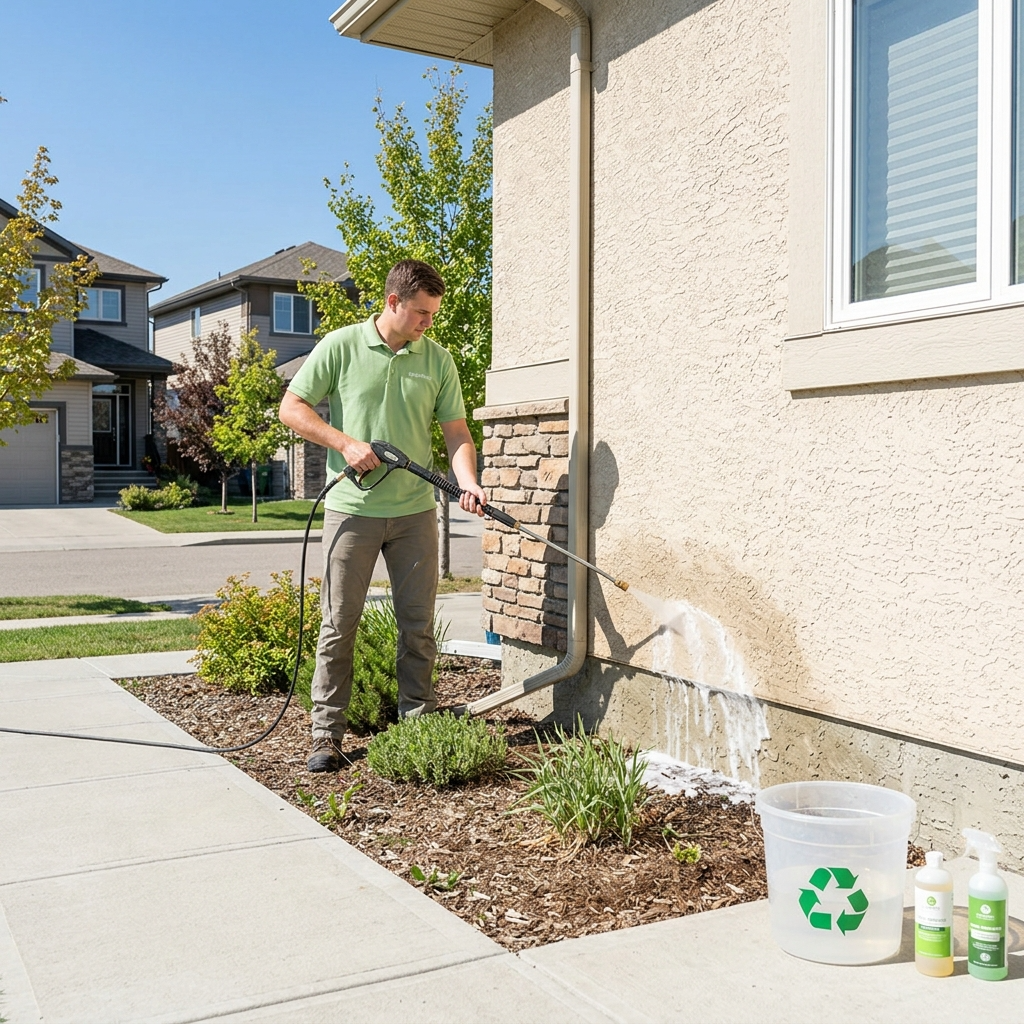
With green cleaning becoming more popular, some companies use environmental language in their marketing without genuinely adopting sustainable practices. Knowing how to separate real eco-friendly service from greenwashing saves you time and ensures your property is actually being cleaned responsibly.
Look for specific certifications and credentials. Reputable eco-friendly cleaning companies may hold certifications from organizations like the Cleaning Industry Management Standard Green Building (CIMS-GB), or they may use products certified by third-party bodies like EcoLogo or EPA Safer Choice. These credentials indicate that the company has been independently evaluated for its environmental claims.
Ask direct questions before hiring any provider. Ask specifically what cleaning agents they use and whether those products are certified biodegradable. Ask whether they use water reclaim systems and how they dispose of collected wastewater. Ask for documentation of their environmental practices if needed.
Red flags to watch out for include vague phrases like “environmentally conscious” without supporting detail, no mention of water reclaim or wastewater disposal practices, and an inability to name the specific products they use. A company that truly operates sustainably will have no problem answering these questions with specifics.
Verifying a provider’s water reclaim practices is especially important in Calgary, where stormwater regulations are actively enforced. Ask the company to walk you through how they set up containment and what happens to the collected water after the job.
Calgary-Specific Environmental Considerations
Calgary has specific local regulations that govern exterior cleaning, particularly around wastewater discharge. Under the City of Calgary’s Stormwater Management Bylaw, it is prohibited to allow any wastewater, including wash water from exterior cleaning, to enter the storm drain system. This applies to both residential and commercial properties and carries real penalties for non-compliance.
The Bow River watershed is the backbone of Calgary’s water supply and a sensitive ecological zone. Runoff from cleaning activities that reaches natural drainage channels can introduce contaminants that affect aquatic life and drinking water quality. Every cleaning decision made on a Calgary property has the potential to affect this watershed, which makes choosing an eco-friendly provider a community responsibility as well as a personal one.
Calgary’s climate also influences when and how exterior cleaning should be done. The city experiences significant seasonal temperature swings, with freeze-thaw cycles that can affect surface materials and the effectiveness of certain cleaning agents. Low-temperature use of some biodegradable detergents requires adjustment in formulation concentration. Professionals who understand Calgary’s climate will plan cleaning schedules and product choices accordingly.
The city’s periodic water restrictions during dry summers also make water-efficient cleaning methods a practical necessity. Companies using reclaim systems and low-flow equipment help their clients stay compliant with any active water use restrictions while still completing necessary cleaning work.
The Role of Professional Equipment in Eco-Friendly Cleaning
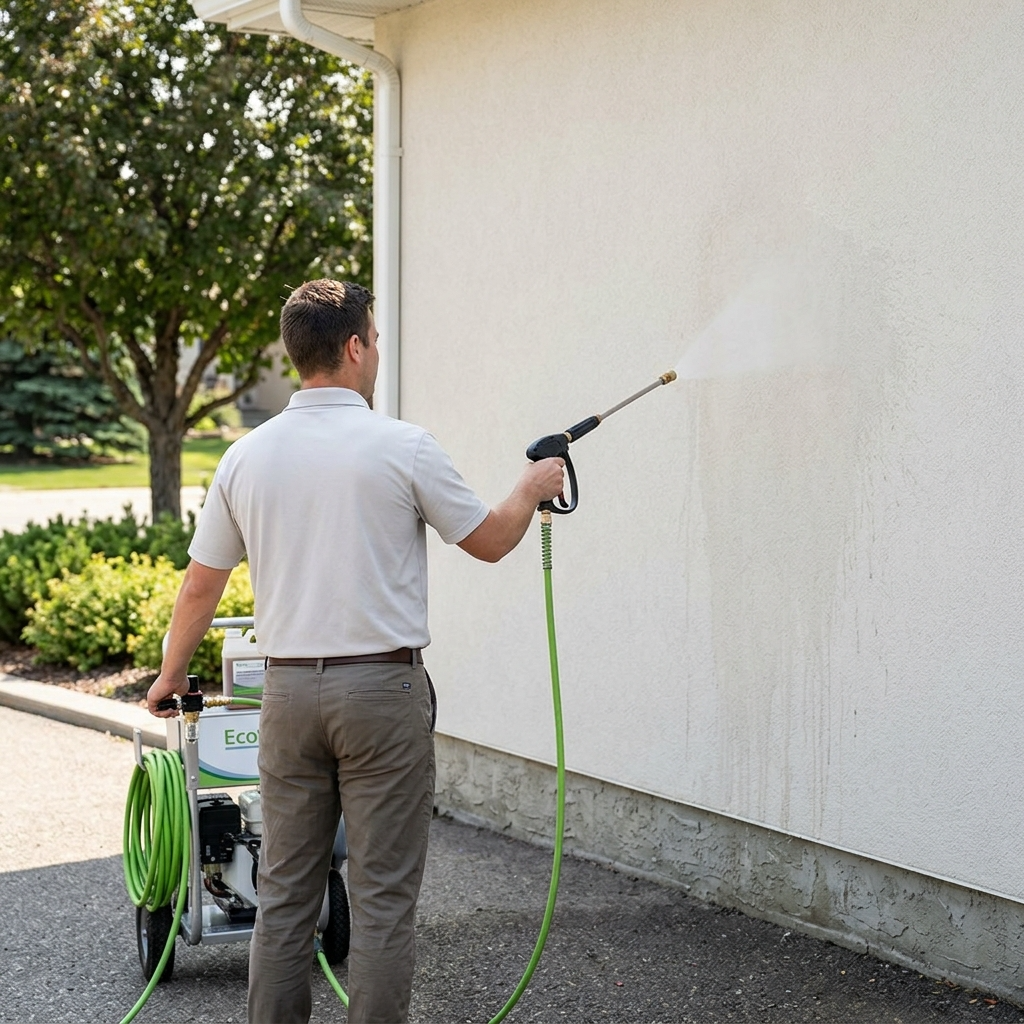
The quality and type of equipment a cleaning company uses has a direct impact on how sustainable their service actually is. Older or poorly maintained equipment often wastes more water, requires stronger chemicals to compensate for lower efficiency, and may not be compatible with reclaim systems.
Modern pressure washing systems designed for eco-friendly use feature variable flow rates that allow operators to use only the water pressure needed for each specific surface. This reduces total water consumption and prevents surface damage from excessive pressure. Some units are also designed to integrate directly with reclaim and filtration equipment.
Soft wash systems use lower water pressure than traditional pressure washers, typically operating below 500 PSI compared to the 2000-3000 PSI of standard equipment. This low-pressure approach relies on the cleaning chemistry to do the heavy lifting, which means less water is used and surfaces are far less likely to be damaged. Soft washing is particularly well-suited to Calgary’s older brick and stucco homes.
Temperature control is another factor. Hot water pressure washing can improve cleaning efficiency, allowing lower concentrations of cleaning agents to be used for the same result. This means less chemical use overall, which is better for the environment and for surfaces.
Regular equipment maintenance ensures that seals, fittings, and pumps operate at peak efficiency. A well-maintained machine uses water more precisely, reduces the risk of chemical leaks, and extends the equipment’s working life, which is itself a sustainability benefit. Geokat Clean Pro maintains its equipment to manufacturer standards to ensure every job meets our environmental commitments.
Cost and Value of Eco-Friendly Exterior Cleaning
One of the most common questions property owners ask is whether eco-friendly cleaning costs more than traditional methods. The honest answer is that it can carry a slightly higher upfront cost in some cases, but the overall value proposition strongly favors sustainable cleaning.
| Factor | Eco-Friendly Cleaning | Traditional Cleaning |
|---|---|---|
| Chemical cost | Moderate (biodegradable agents) | Lower (bulk harsh chemicals) |
| Water usage | Low (reclaim systems) | High (full discharge) |
| Surface wear | Minimal | Higher over time |
| Landscape damage risk | Very low | Moderate to high |
| Regulatory compliance | Built-in | Requires extra planning |
| Long-term property cost | Lower | Higher |
The long-term savings from eco-friendly cleaning come from multiple directions. Gentler cleaning methods preserve surface coatings, sealants, and finishes for longer, reducing how often you need to repaint, reseal, or repair exterior surfaces. Protecting your landscaping from chemical damage avoids the cost of replacing plants and garden features.
From an insurance and liability perspective, using a compliant, environmentally responsible cleaning service reduces your exposure. If a traditional cleaning job causes chemical damage to neighboring landscaping or runoff into protected areas, you could face claims or fines. A properly conducted eco-friendly cleaning job carries none of that risk.
The return on investment for sustainable cleaning is strongest when viewed over a multi-year horizon. Properties that are cleaned regularly with gentle, effective methods maintain higher curb appeal, require fewer exterior repairs, and are generally perceived as better maintained, which supports property value.
Frequently Asked Questions
What makes exterior cleaning eco-friendly?
Eco-friendly exterior cleaning combines three key elements: biodegradable cleaning agents that break down safely in the environment, water reclaim systems that prevent contaminated runoff from entering waterways, and low-impact application methods like soft washing that minimize water use and surface damage. All three need to be present for a cleaning service to be genuinely sustainable.
Are eco-friendly cleaning solutions as effective as traditional chemicals?
Yes, in most applications. Modern biodegradable detergents have advanced significantly and now match or outperform traditional chemicals on common exterior soiling like mold, mildew, algae, and general grime. When paired with the right application technique, green cleaning products deliver excellent results without the environmental cost.
How much water can be saved with water reclaim systems?
Advanced water reclaim systems can recover up to 90% of the water used during a cleaning job. For a typical commercial parking lot cleaning that might use 500 to 1,000 gallons of water, that represents a saving of 450 to 900 gallons per job. Over a season of regular cleaning, the water conservation impact is substantial.
Is eco-friendly pressure washing more expensive?
It can carry a slightly higher service cost in some situations due to the cost of specialized equipment and biodegradable products. However, when you factor in lower long-term surface maintenance costs, protection of landscaping, and built-in regulatory compliance, the total cost over time is generally equal to or lower than traditional methods.
Can eco-friendly cleaning damage my property?
When performed by trained professionals using the right equipment and methods, eco-friendly cleaning is actually less likely to damage your property than traditional high-pressure methods. Soft washing, in particular, is designed to protect delicate surfaces while still removing biological growth and soiling effectively.
How often should I schedule eco-friendly exterior cleaning in Calgary?
For most Calgary residential properties, once or twice a year is sufficient, with late spring and early fall being the ideal timing. Commercial properties with higher foot traffic or exposure to industrial soiling may benefit from more frequent cleaning, typically quarterly. Calgary’s climate, with its heavy winters and dusty springs, means an annual post-winter clean is almost always recommended.
What certifications should eco-friendly cleaning companies have?
Look for companies using products certified by EcoLogo, EPA Safer Choice, or equivalent third-party environmental certification programs. Industry certifications like the Cleaning Industry Management Standard Green Building (CIMS-GB) are also meaningful. Most importantly, ask the company directly about their specific practices and whether they follow Calgary’s stormwater bylaws for wastewater disposal.